  
|
|
|
   |
Whitby Walk
Point 4 - Pressgangs
|
|
|
Quaffing a pint of the best Yorkshire ale in Whitby in the late 18th Century was often a dangerous pleasure. It could have been the era that brought the term 'watch your backs'.
|
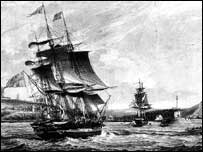 |
But, fine though the ale might have been, warm though the log fire was, and convivial the company, on many occasions, unwelcome visitors would burst through the doors of the hostelry.
It would have been the pressgangs. They had earned a despicable reputation for violent recruiting methods for His Majesty's Royal Navy.
Recruiting for the navy in those days was at an all-time low. The conditions at sea were unspeakable. Long days, weeks on end at sea, on-board disease and, of course, physically demanding naval action was no tea party.
|
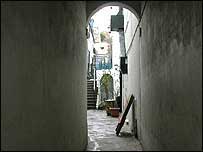
Many a victim escaped up an alley
|
'King's Shilling'
Little wonder there was no appetite for volunteering.
Those who did volunteer earned themselves the "King's Shilling" (King George III). And it was often the case that the pressgangs would slip that royal coin into an unsuspecting pocket and collar yet another raw recruit.
They would even stoop to the depths of dropping the shilling into pints of ale - a habit that spawned a fashion for the glass bottom tankard, so the unsuspecting drinker could imbibe with impunity, leaving the currency at the bottom.
So low had naval man-power become, that in 1795, William Pitt introduced two Quota Acts in parliament. These demanded that each county had to provide a quota of men for the Royal Navy depending on its population and number of seaports.
London had to produce 5,704 men, and Yorkshire, the largest county, had to provide 1081 - Whitby was an obvious target.
|
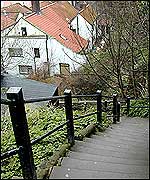
A swift escape up the West Cliff
|
Enter the pressgangs
But, just four years before the Napoleonic wars (1799-1815), the navy became desperate for new recruits, so they turned to the strong-arm tactics of the pressgangs.
These gangs of licensed thugs were organised by the Impress Service in certain ports around the country.
They were supposedly limited to seizing men who were seamen - but they often simply ignored this regulation.
They took scant regard for age limits too. Only those between 18 and 55 were to be "pressed".
Whitby men were particularly sought after for their seafaring skills and their robust character, but the recognition of such qualities was of no compensation for a life in the navy at the time.
Merchant seamen were often targeted by the gangs. One such time was when the whaler "The Oak" sought refuge in Whitby's harbour from a ferocious sea in 1803.
Whaling crews were supposed to be exempt from being pressed, as whale oil was in high demand. But that cut no ice with the Whitby pressgang - a pressed recruit was a prize, and The Oak was bristling with them.
Despite the screams and rattling of pots and pans from the quayside, the gang laid siege to the entire crew for enforced conscription.
But, the locals had the last laugh. They, in turn, caused such a riot that they managed to spirit away the crew of The Oak through many of Whitby's 120 interconnecting yards.
It was not until the end of the Napoleonic Wars that the fear of the press gang subsided and quaffing that pint became a pleasure again.
Moving on… as long as you haven't been pressed into service, you can come back to the quayside and find out more about the illustrious fishing heritage on Whitby's fish-quay…
|
|
|
|
|
|
|
|
|
|
|
|
|
|
|
|